Follow us

OUR CAMPAIGN
IKA highlights link between Heart Health and Kidney Health to mark WORLD KIDNEY DAY
The Irish Kidney Association (IKA) and the National Renal Office (NRO), together with the Irish Heart Foundation and Croí Heart and Stroke Charity, are joining forces for a campaign to raise awareness about the close link between Heart Disease and Chronic Kidney Disease. This campaign will mark World Kidney Day which will be celebrated on Thursday, 9th March 2023, and will include a free public webinar titled ‘Kidney and Heart Health Go Hand in Hand’.

How are Kidney health and Heart health related?
Scroll across to read
A Two Way Relationship
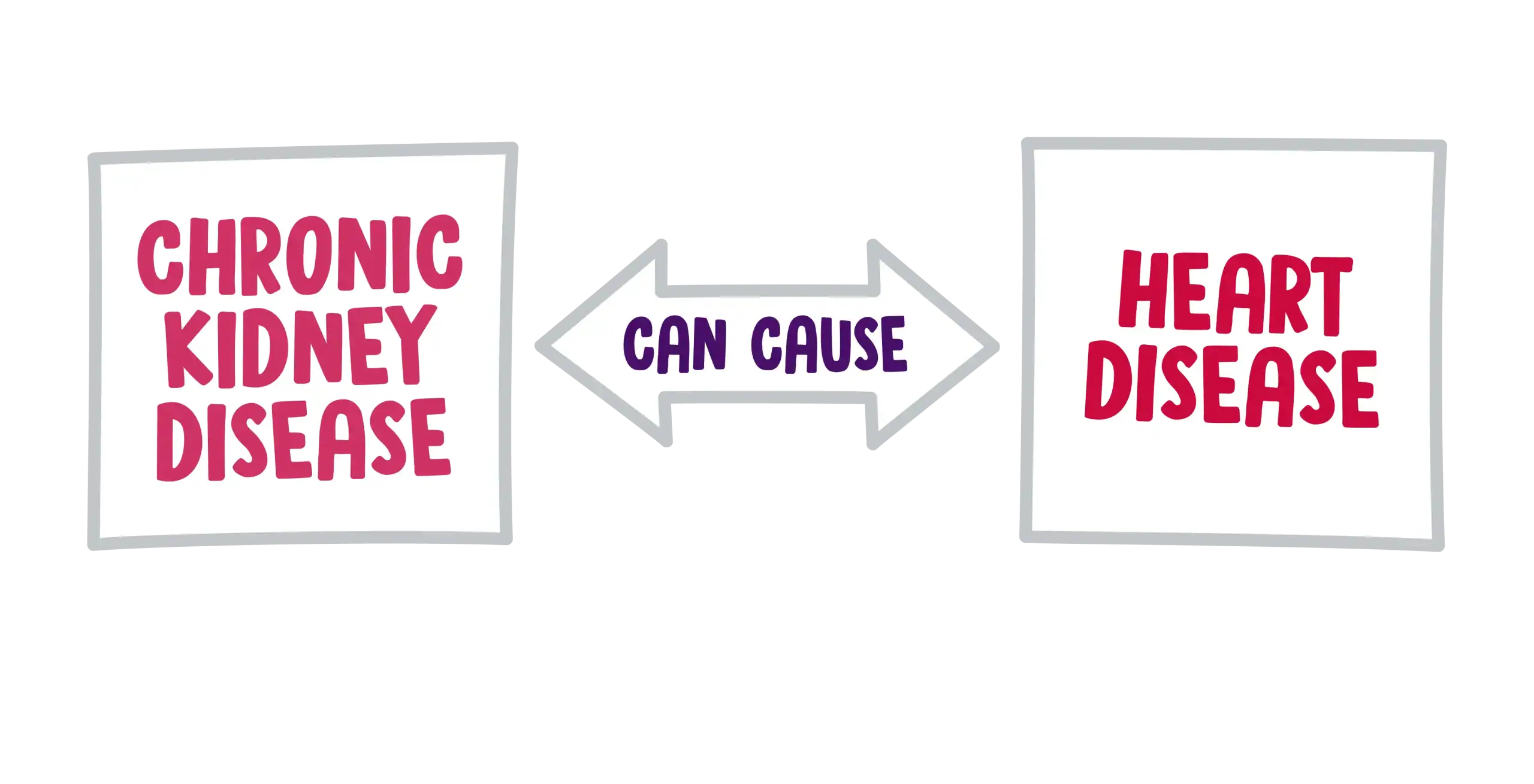
The kidneys control blood pressure and clean the blood (by removing waste). Without the kidneys, your blood would have too much waste and water putting pressure on your heart to pump extra fluid around your body. Without the heart, your kidneys would not have the oxygen-filled blood needed to do its many important jobs
Diabetes and High Blood Pressure (also known as Hypertension) are leading causes of Chronic Kidney Disease and leading causes of Heart Disease. However, even without High Blood Pressure or Diabetes, having Chronic Kidney Disease on its own puts you at higher risk of developing heart problems, and if you have Heart Disease, from any cause, you are more likely to develop kidney problems than people without heart disease
Anaemia in Chronic Kidney Disease is very common. Anaemia reduces the blood’s ability to carry oxygen meaning that the heart must work extra hard to get the required amount of oxygen to the cells and organs for them to function properly. This extra work can lead to damage to the heart.
How can you reduce your risk of kidney and heart diseases?
Be physically active
Enjoy a healthy lifestyle
Engage with your own healthcare
Know your numbers
If you have Diabetes make sure you know your target blood sugar range and your HbA1c (this is a test that gives the average blood sugar over the previous 2-3 months). You should also know your GFR (glomerular filtration rate) which measures how well your kidneys works
If you have Chronic Kidney Disease or Heart Disease you should know your weight and monitor it as increasing weight could be caused by your body retaining fluid
50% of people with advanced (Stages 4 and 5) Chronic Kidney Disease are likely to have heart disease.
50% of people with heart failiure are likely to have Chronic Kidney Disease.

What Conditions Are Considered Heart Disease
Blood vessel disease, such as Coronary Artery Disease
Irregular heartbeats (arrhythmias)
Heart problems you’re born with (congenital heart defects)
Disease of the heart muscle
Heart Valve Disease
Heart failure – which is where the heart’s pump function does not work as well as needed
1 in 8 people have Chronic Kidney Disease (CKD). It is measured in five stages with stage five being described as ‘End Stage Kidney Disease’. It is frequently called a hidden disease as it often does not cause symptoms until late in the disease and so can go undiagnosed.
Although only 1 in 1,000 people will reach stage five, (requiring dialysis or a kidney transplant), it is important to understand that if you have CKD you are at risk of getting Heart Disease. As your CKD worsens, your risk of heart problems increases. Your risk of heart problems is even higher if you are on dialysis.
Even if you have a kidney transplant your risk of developing heart disease is still higher than somebody with no kidney disease.
We all have kidney numbers.
Your kidney numbers show how well your kidneys are working and whether you need treatment.
Your numbers are determined through two simple tests: A urine test known as ACR (Albumin to Creatinine Ratio) and a blood test known as GFR (glomerular filtration rate).
Do you know yours?
ACR tests how much albumin (a type of protein) is in your urine. Too much albumin in your urine is an early sign of kidney damage.
GFR is a measure of how well your kidneys work, and shows if you have CKD.

Kidney Health and Heart Health Go Hand In Hand webinar
Highlighting the links between kidney health and heart health.
Speakers: Professor George Mellotte – National Clinical Lead, National Renal Office Maeve Frawley – Cardiovascular Nurse Specialist, Croí Heart & Stroke Charity Paul Owens – Patient Story Carol Moore – CEO, Irish Kidney Association Colin White – National Advocacy and Projects Manager, Irish Kidney Association
