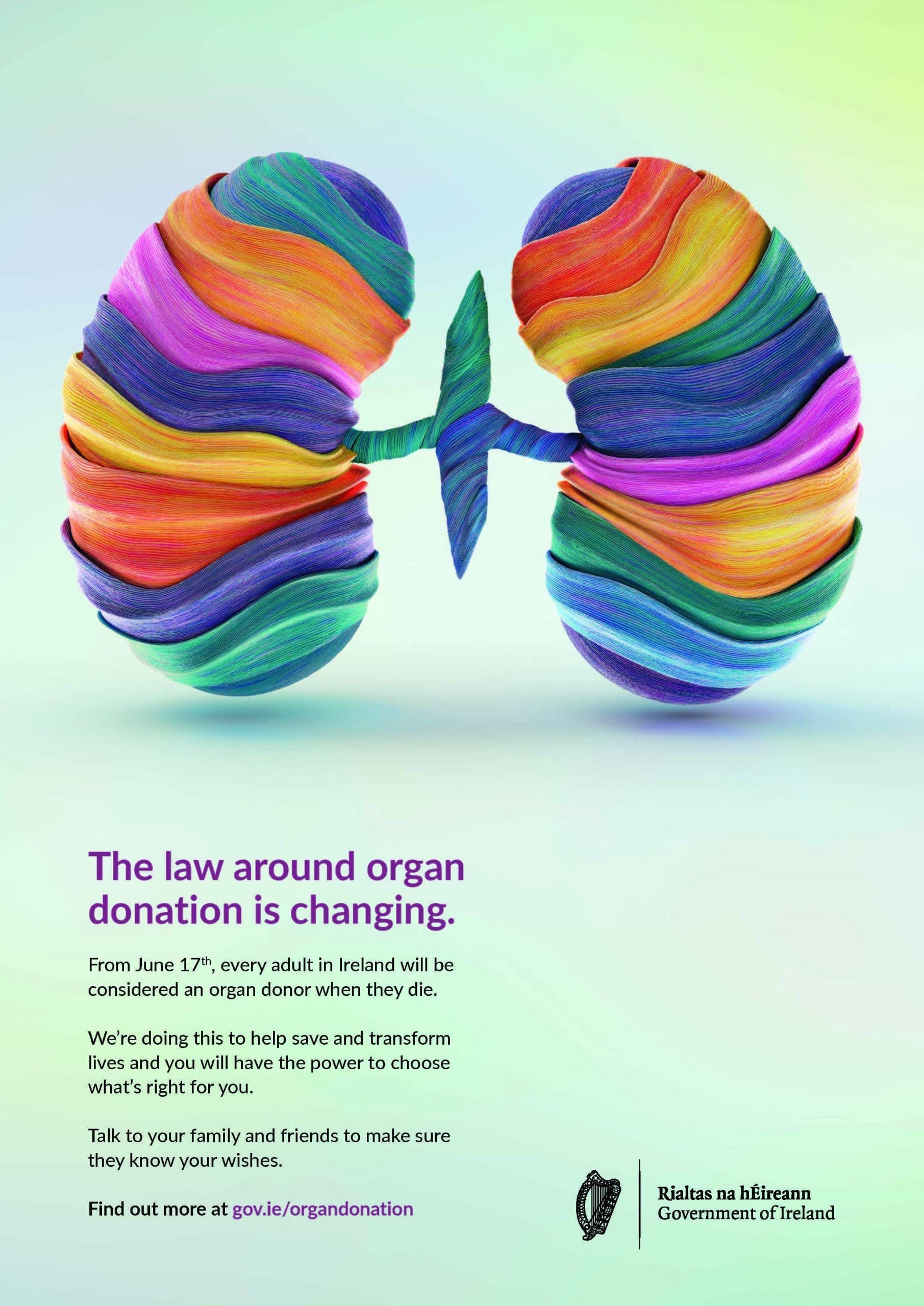
The Human Tissue (Transplantation, Post-Mortem, Anatomical Examination and Public Display) Act 2024 commenced on Tuesday 17th June 2025. The Irish Kidney Association welcomes this legislation as a positive step forward in the advancement of organ donation and transplantation in Ireland, providing a long-awaited legal framework for these life saving practices.
What Will The Legislation Change?
This family will continue to have a central role in the organ donation process.
The legislation introduces an Opt-out Register that is operated by the HSE. If you choose not to be considered a potential organ donor, you can record your details on the Opt-out Register and your wishes are protected as a point of law.
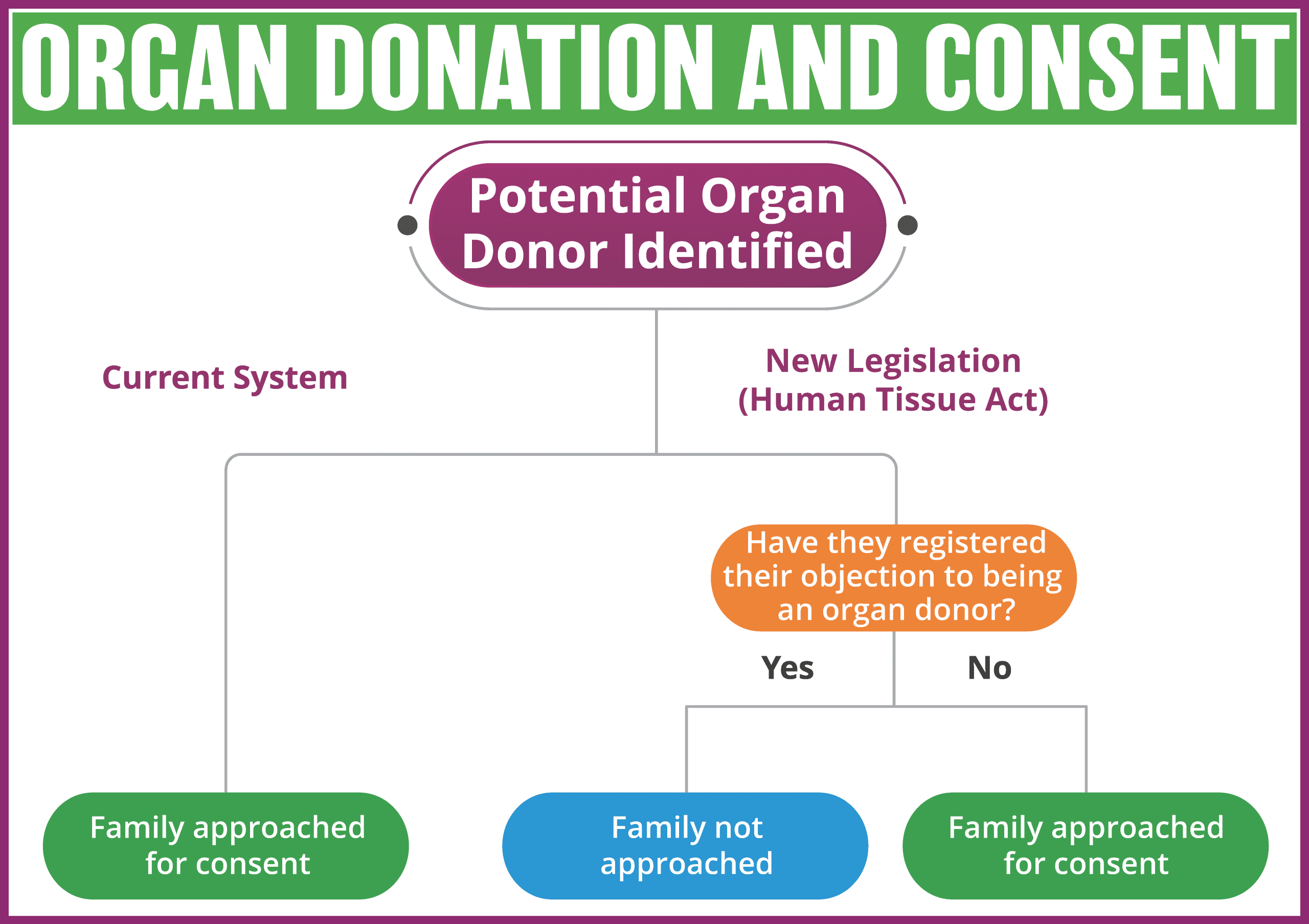
Under the new legislation, if a potential donor is identified, the healthcare professional will first check the Opt-out Register to see if the potential donor has registered their objection.
- If the potential donor has registered their decision on the Opt-out Register, the family will not be approached and organ donation will not take place.
- If the potential donor has not registered their decision on the Opt-out Register, the family will be approached to be asked if their loved one would have had any objection to organ donation going ahead.
It is important to acknowledge, and respect, that there are some people who do not want to be considered as potential organ donors. The Opt-out Register has been introduced to protect that choice.
The Human Tissue Act: What You Need to Know
The Human Tissue Act introduces two key elements.
- The introduction of an Opt-out Register that will be managed by the HSE. Individuals who do not wish to donate their organs can register their decision on the Opt-out Register. If a potential organ donor is on this register, their family will not be approached regarding organ donation, and their wishes will be respected.
- The introduction of Deemed Consent. By not opting out, a person is agreeing to be considered as a potential organ donor. The family remains part of the decision making process.
How will the legislation operate in practice?
The HSE has put together a Frequently Asked Questions section on their website that address many of the common queries or concerns that have been raised in relation to the legislation.
How Does Organ Donation Work?
Organ donation is the process of surgically removing an organ or tissue from one person (the organ donor) and placing it into another person (the recipient).
The organs that can be donated in Ireland are the:
- Kidneys
- Heart
- Lungs
- Liver
- Pancreas
Organ donation may only be considered when a person is on a life-support machine in an intensive care unit and declared brain stem dead. Two independent doctors verify the diagnosis.
Less than 1% of deaths annually happen in the circumstances where organ donation is a possibility.
The HSE provides more details about the Organ Donation process here.
Organ Donation and Misinformation
In today's digital age, misinformation can spread quickly, and misleading information about the organ donation process can often be found across various media platforms and online. This creates unnecessary concerns for people when making their decision in becoming an organ donor. Recognising the impact of these misconceptions, we have compiled a dedicated page that addresses the facts of the organ donation process and dispels some of the most common myths.
The Donor Card
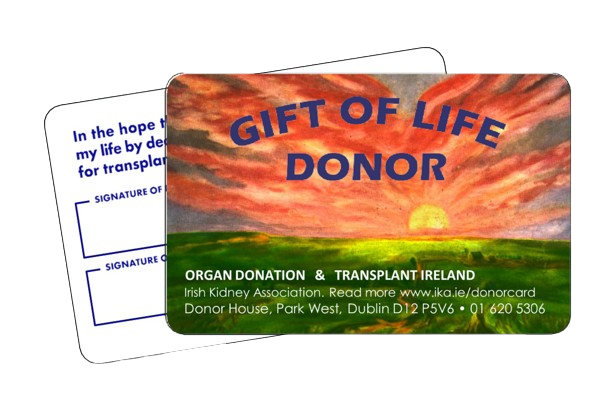
The Organ Donor Card is a visual representation of your decision to give the 'Gift Of Life' in the event of your death. By signing the card and carrying it with you, you are documenting your wishes to be an organ donor.
The card plays an important role in initiating the 'Organ Donation Conversation' with your loved ones. Discussing your wishes openly ensures that your family understands and honours your decision.
The Role of the Family in Organ Donation
It has always been the case that in the event that someone is identified as a potential organ donor (they have been declared brain-stem dead when on a life-support machine in an Intensive Care Unit) their family is approached for consent to retrieval of the organs for transplantation. This role remains with the commencement of the Human Tissue Act.
"Where a person has not registered his or her objection to the donation of his or her relevant organs in accordance with section 33, a registered medical practitioner... shall satisfy himself or herself that the designated family member of the person has confirmed that he or she does not have any objection to the donation of the relevant organ."
- Human Tissue (Transplantation, Post-Mortem, Anatomical Examination and Public Display) Act 2024
Resources and Further Reading
GET IN TOUCH, WE'D LOVE TO HEAR FROM YOU!
Here at the IKA we're more than happy to assist you with anything you might need. If you've got any questions or concerns then please feel free to use the contact form on the right to send us a message.