Follow us

patient guides
Governance & Compliance
Print copies of each book are available – please contact info@ika.ie or 01 620 5306.
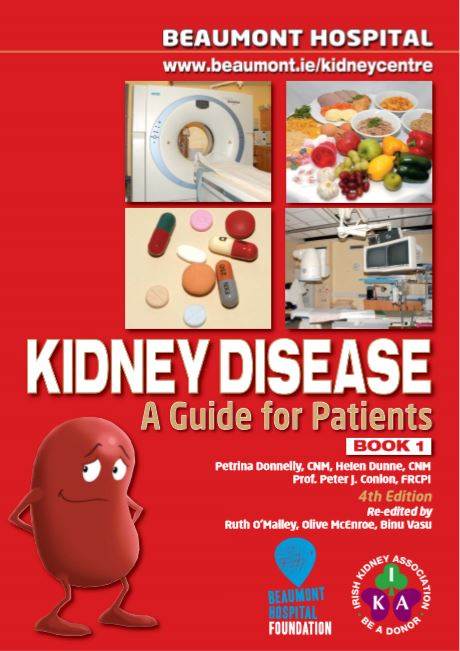
Kidney Disease
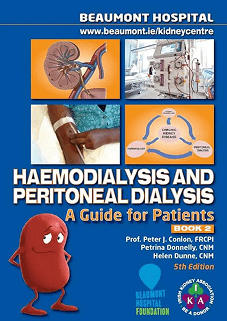
Haemodialysis and peritoneal dialysis
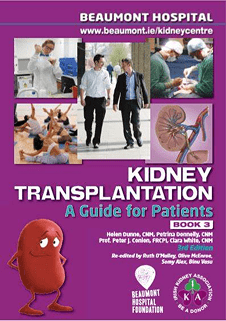
Kidney Transplantation

Emotional Wellbeing
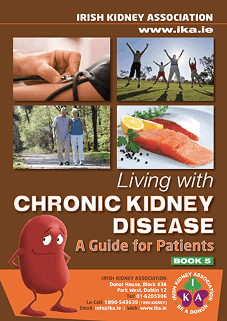
Chronic Kindey Disease

Emotional Wellbeing

Conservative Care of Kidney Failure

Thinking About Donating A Kidney?
Who Is At Higher Risk Of Developing CKD?
You Are, If You…
Have diabetes
Have high blood pressure
Have a family history of kidney disease
Are over 50 years old
Are obese
Have had acute kidney injury
Long-term use of over-the-counter medications
Have heart disease
We All Have Kidney Numbers. Do You Know Yours?
Your kidney numbers show how well your kidneys are working and whether you might need treatment.
Your numbers are determined through two simple tests:
Urine Test: ACR (Albumin to Creatinine Ratio) tests how much albumin (a type of protein) is in your urine. Too much albumin in your urine is an early sign of kidney damage.
Blood Test: GFR (Glomerular Filtration Rate) is a measure of how well your kidneys work, and shows if you have Chronic Kidney Disease (CKD).

What Happens If I Am Diagnosed With CKD?
The stages of CKD can be thought of in terms ranging from 1 to 5. Most patients who are diagnosed as having Stage 1, 2, or 3 have only mild kidney disease and do not progress to End Stage Kidney Disease (ESKD).
Early detection and treatment matter — no two patients are the same and progression is not predictable, but for example, if your kidney numbers dropped by 1% each year, it would take 80 years to progress from Stage 1 (90%+) to ESKD (<15%).
Once Stage 4 is reached, damage is more severe and usually not reversible, and Stage 5 is where options such as dialysis or a kidney transplant will be explored.
What Are The Stages of CKD?
CKD is divided into five stages based on kidney function (GFR levels). Stage 1–3 indicate mild to moderate disease, while Stages 4–5 involve more significant loss of kidney function.
Why Do We Count On Our Kidneys?
Kidneys perform vital functions such as filtering waste, balancing fluids, and maintaining blood pressure. When kidneys fail, toxins build up, leading to serious health complications.
What Is Chronic Kidney Disease?
Chronic Kidney Disease (CKD) is a long-term condition where the kidneys do not work effectively. It is often caused by diabetes or high blood pressure and tends to progress over time.
How Are Kidney Health and Heart Health Related?
The heart and kidneys are closely connected. Poor kidney function can strain the heart, while heart disease can reduce kidney blood flow — maintaining both organs’ health is essential.
Download Leaflets and Posters
Leaflet v1
Leaflet v2
Kidney Health and Heart Health Poster
Awareness Poster
Know Your Numbers
Know your Blood Pressure target. This is usually less than 140/90, but for some people is less than 130/80 (ask your doctor). If you have Diabetes make sure you know your target blood sugar range and your HbA1c (this is a test that gives the average blood sugar over the previous 2-3 months). You should also know your GFR (glomerular filtration rate) which measures how well your kidneys works. If you have Chronic Kidney Disease or Heart Disease you should know your weight and monitor it as increasing weight could be caused by your body retaining fluid.
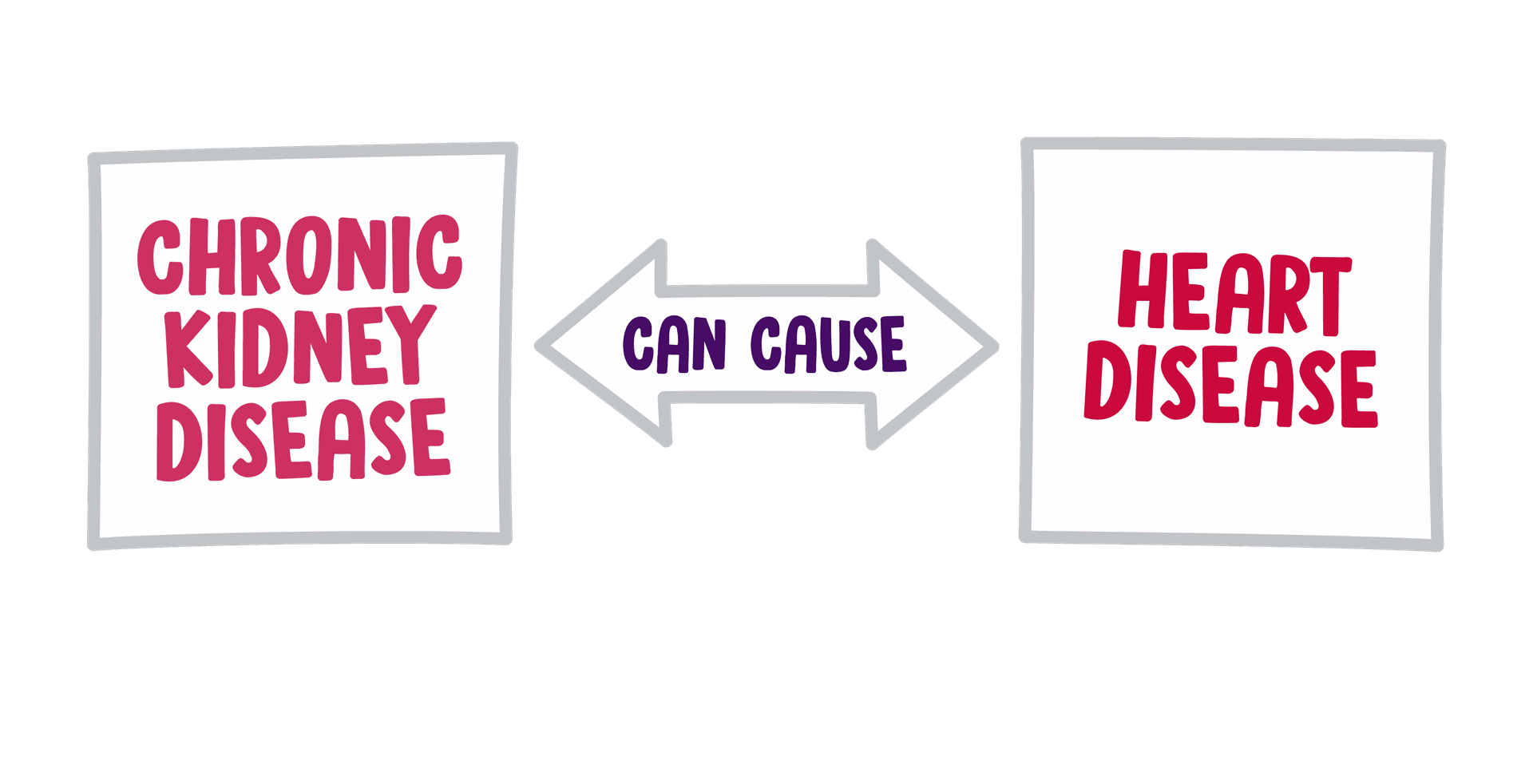

A Two Way Relationship
Diabetes and High Blood Pressure (also known as Hypertension) are leading causes of Chronic Kidney Disease and leading causes of Heart Disease. However, even without High Blood Pressure or Diabetes, having Chronic Kidney Disease on its own puts you at higher risk of developing heart problems, and if you have Heart Disease, from any cause, you are more likely to develop kidney problems than people without heart disease. Anaemia in Chronic Kidney Disease is very common. Anaemia reduces the blood’s ability to carry oxygen meaning that the heart must work extra hard to get the required amount of oxygen to the cells and organs for them to function properly. This extra work can lead to damage to the heart.
Kidney Health and Heart Health Go Hand In Hand webinar
Highlighting the links between kidney health and heart health.
Speakers:
Professor George Mellotte – National Clinical Lead, National Renal Office
Maeve Frawley – Cardiovascular Nurse Specialist, Croí Heart & Stroke Charity
Paul Owens – Patient Story
Carol Moore – CEO, Irish Kidney Association
Colin White – National Advocacy and Projects Manager, Irish Kidney Association
For healthcare professionals
As a healthcare professional, you should also be aware of any other conditions that may involve the kidney, and medications that could have contraindications.
A useful way to identify medications which should be specifically reviewed if a patient is dehydrated, vomiting or has diarrhea, is by using the SADMANS acronym.
For further information, the ICGP guidelines can be found on its website.
Do You Screen Your High Risk Patients Regularly For Chronic Kidney Disease?
Early detection and diagnosis for patients with Chronic Kidney Disease (CKD) can make a big difference to outcomes. Your patients are relying on you to identify if they are at high risk, and regularly screen their Albumin to Creatinine Ratio (ACR) and Glomerular Filtration Rate (GFR).
Do You Have Patients With CKD or Heart Disease?
If you have a patient with Chronic Kidney Disease (CKD) you should suggest screening for Heart Disease, and vice versa. The two diseases often go hand-in-hand.